

Made with
in Orlando, Florida.
© 2026 Create With LLC. All rights reserved.
This changelog is a history of our major product updates.
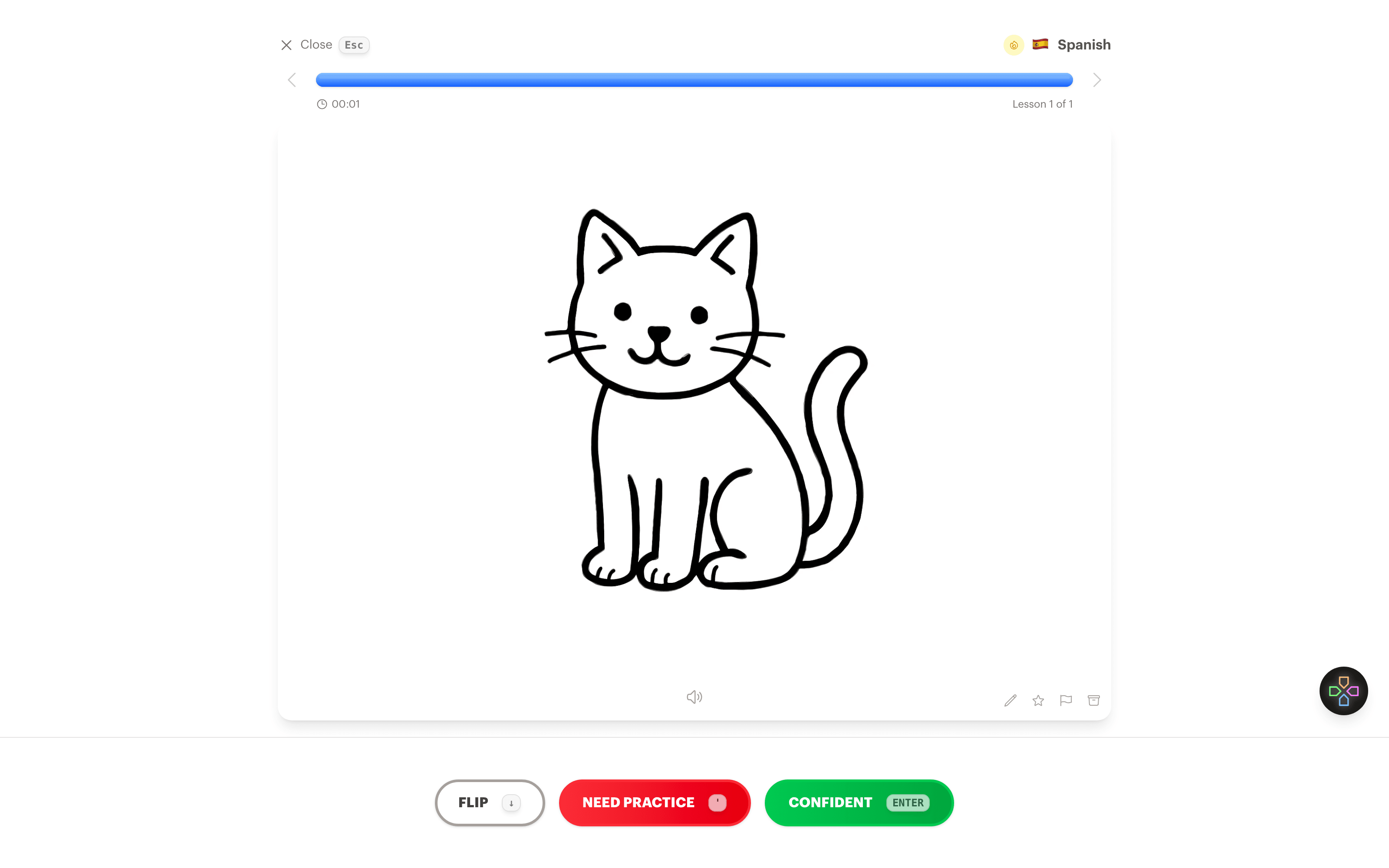
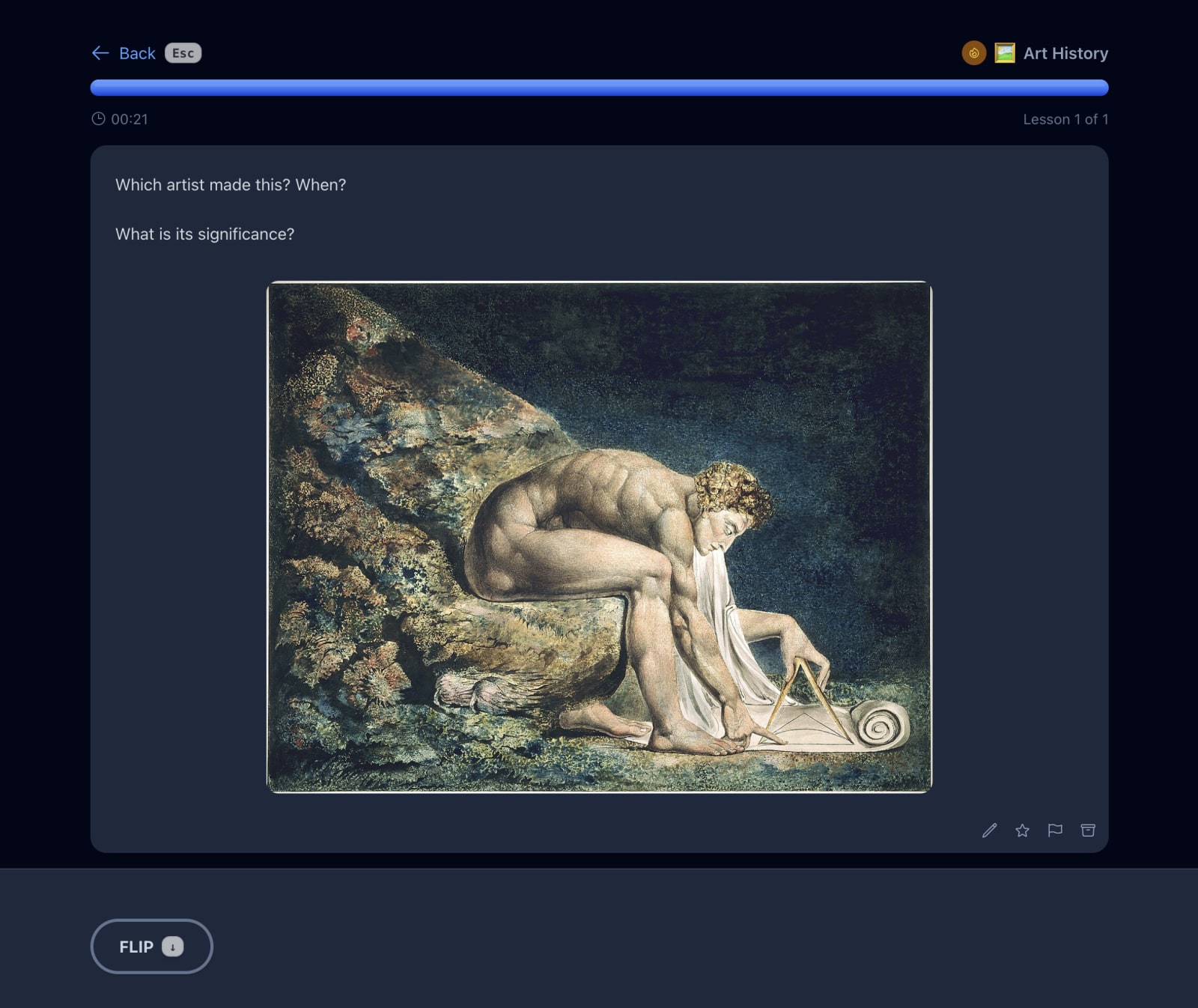
Create visuals for flashcards. Click Create visual under either side of a card and Interact draws a sketch from the card, or from a description you type, and adds it to the card. Made for vocabulary: a picture of a cat on the back of "el gato" instead of a translation, so you learn the word without translating in your head. See the Visual Flashcards page.
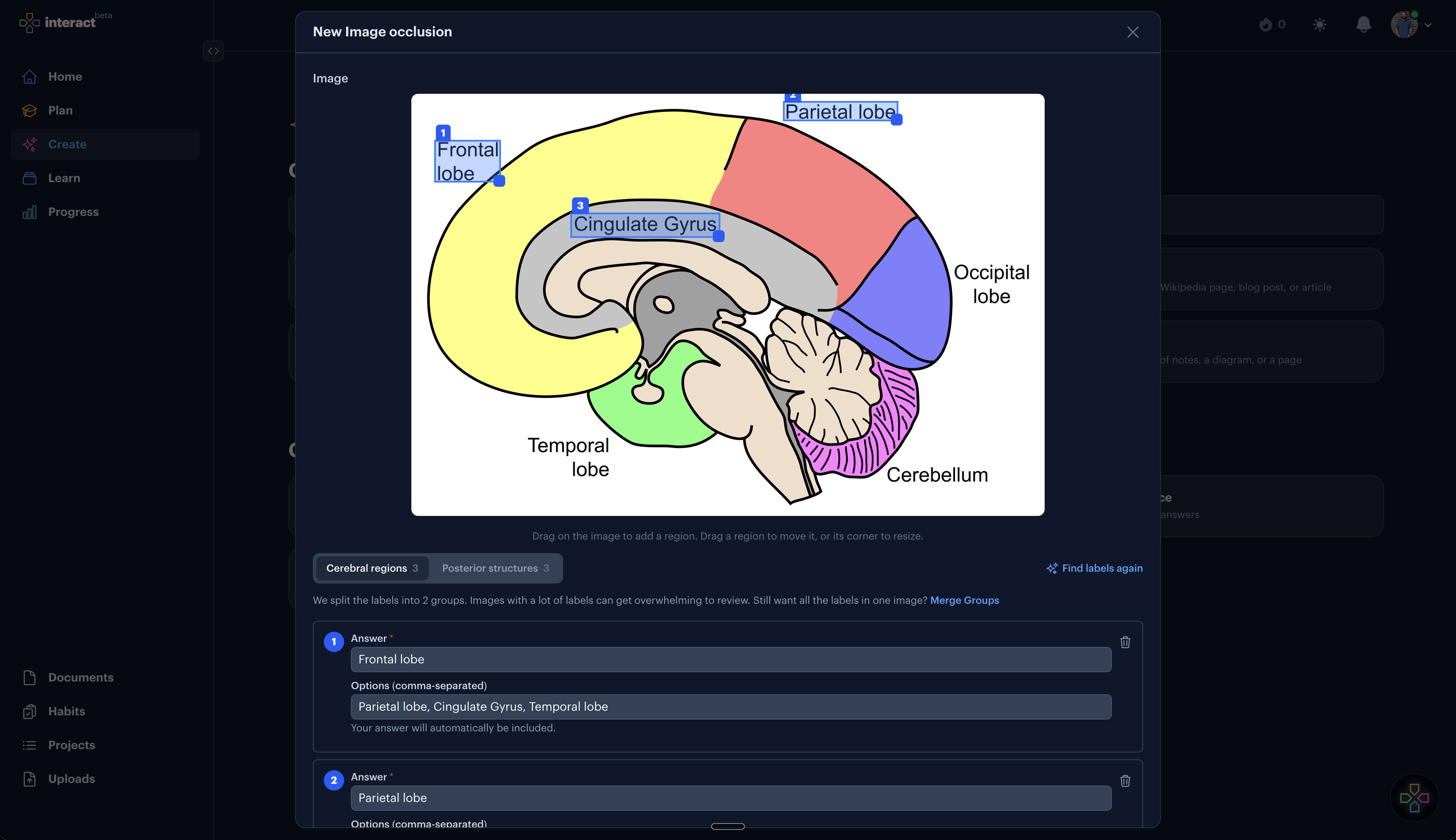
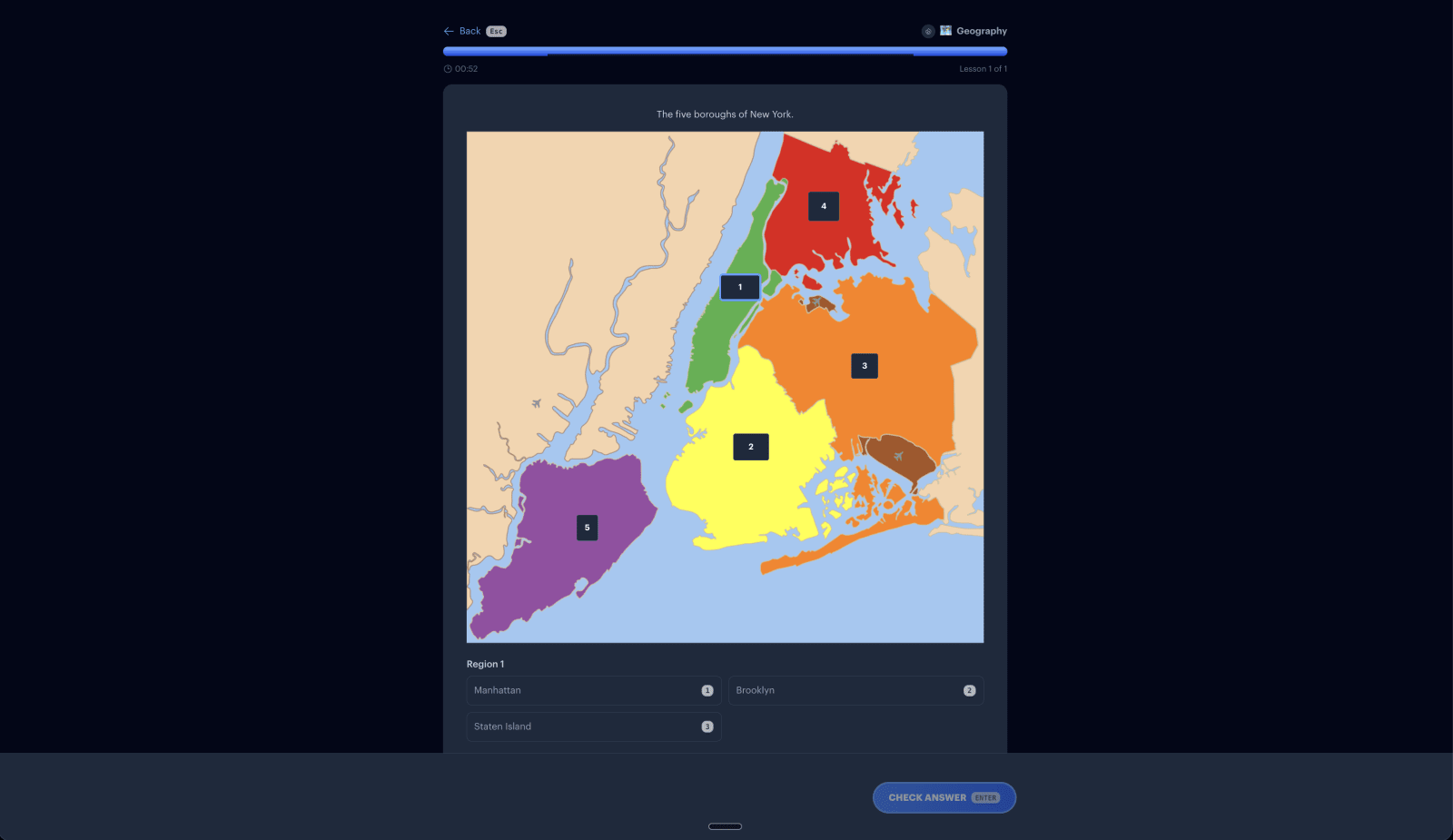
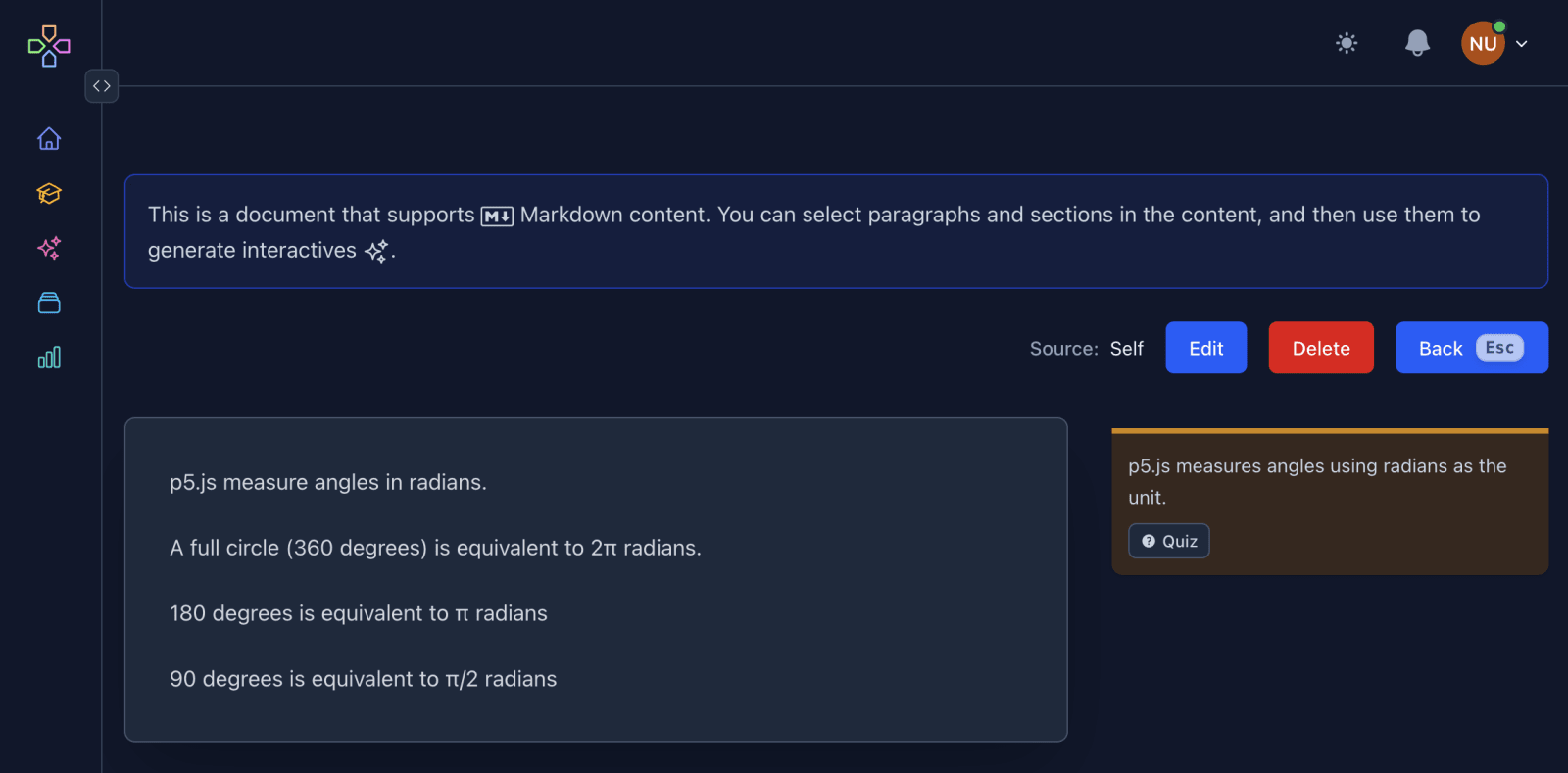
Major updates for Image occlusion interactives. We added a vision agent that can automatically find labels in images and draw regions. I noticed our image occlusion interactives were a big hit, but they were pretty tedious and error-prone to make. Now you can basically upload an image and click a "Find Labels" button and it takes care of everything for you.
Describe a diagram and get an image occlusion. Type something like "the bones of the hand" and Interact draws a labeled diagram, finds the labels, and turns it into an image occlusion you can review right away. Works from the Create page and from Ask.
Ask can do a lot more. It can now find duplicate interactives, archive the ones you don't need, create reverse cards, draw visuals for cards, and link straight to any interactive it mentions.
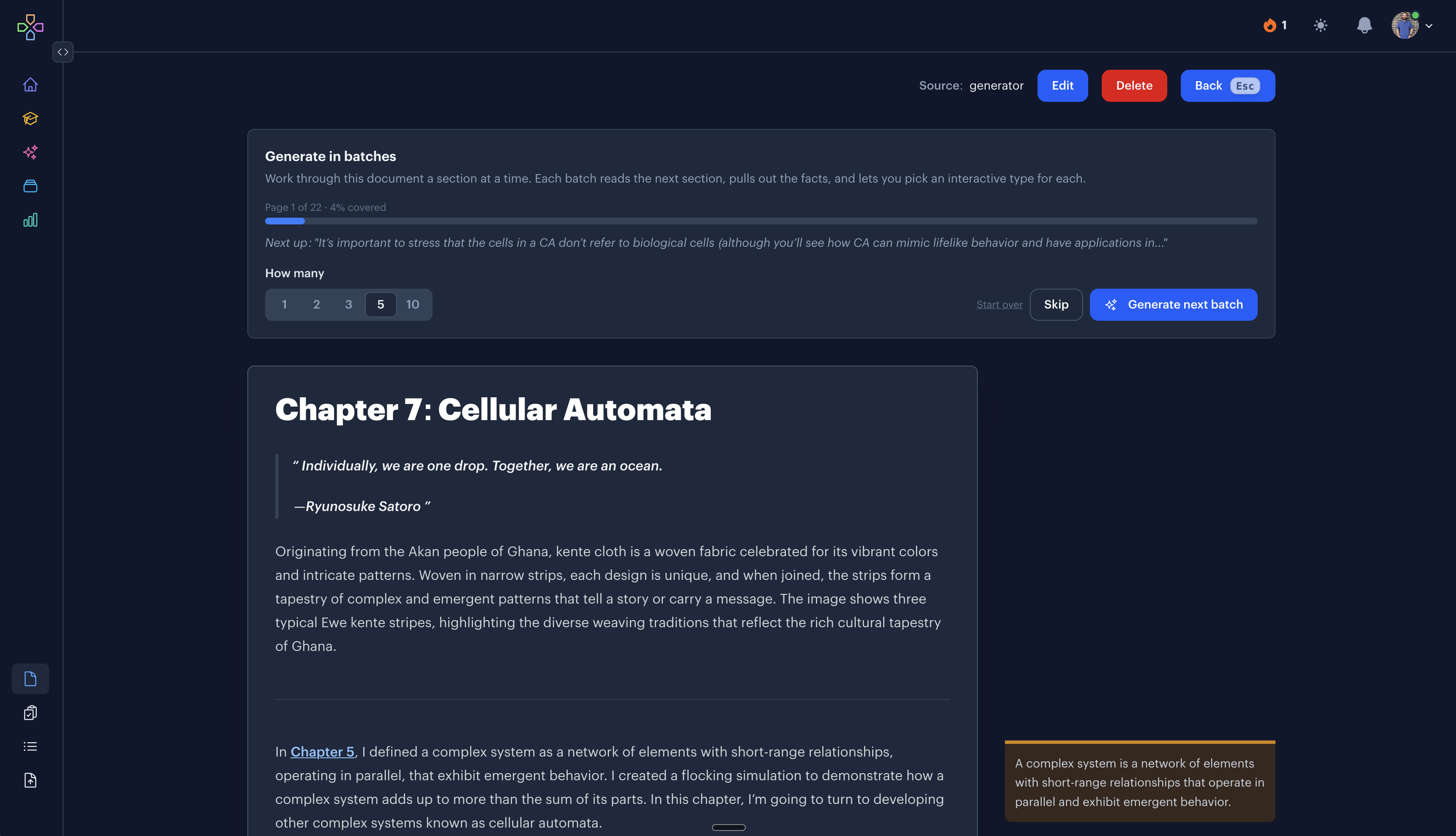
Adaptive Generation. This is a critical project that allows us to handle different types and sizes of content. If you fetch a small Wikipedia article, we can just use it to generate interactives. But if you upload a large textbook chapter, we want to be able to shift to a different experience that allows you to choose which parts are relevant to your learning. Added a "cursor" to keep track of where you left off so you can work through the material in multiple passes.
Create reverse cards on iPhone and iPad. Tap Create Reverse in the lesson menu to flip a card's front and back. Play it right away, or let it come up when it's due.
Launched v0.5 of the native apps for iPhone, iPad, and Apple Watch. Ask now works on every screen instead of only inside a lesson, and the onboarding flow has been redesigned.
Added two new docs pages. Formatting with Markdown has rendered examples of everything you can put on a card, including math and code. Expensing with a Learning Stipend walks through getting your receipts from Stripe or Apple so your job can pay for your subscription.
Simplified the Progress page by removing Inbox Notes and Bookmarks. Weekly review emails are now off by default, and you can turn them on in your settings.
Added some fun particle effects for fire and snow animations. They're hidden easter eggs for now.
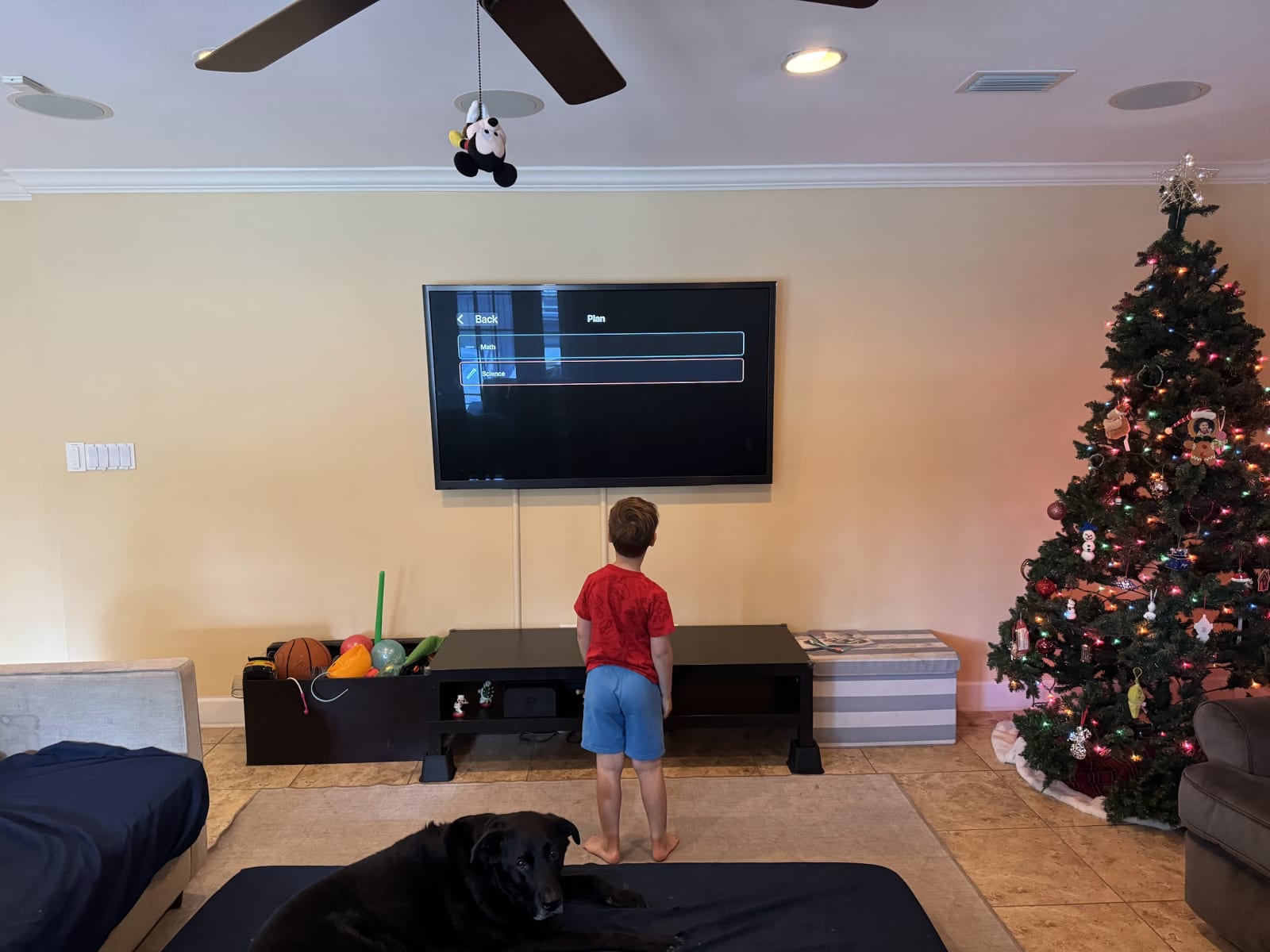
Added text to speech for cards on iPhone, iPad, and Apple TV. Tap a button to hear a card read aloud. Or press the play button on the Apple TV remote.
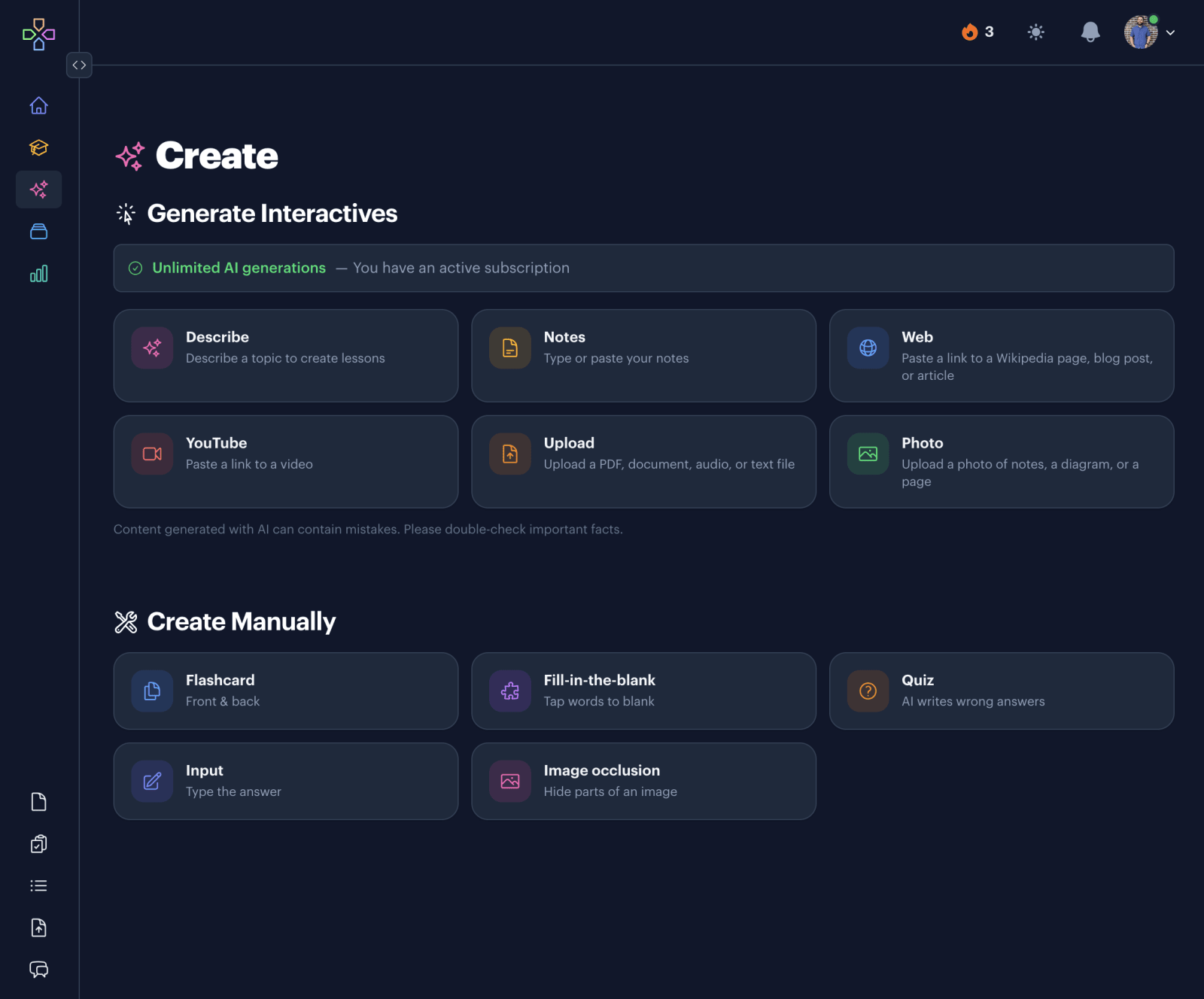
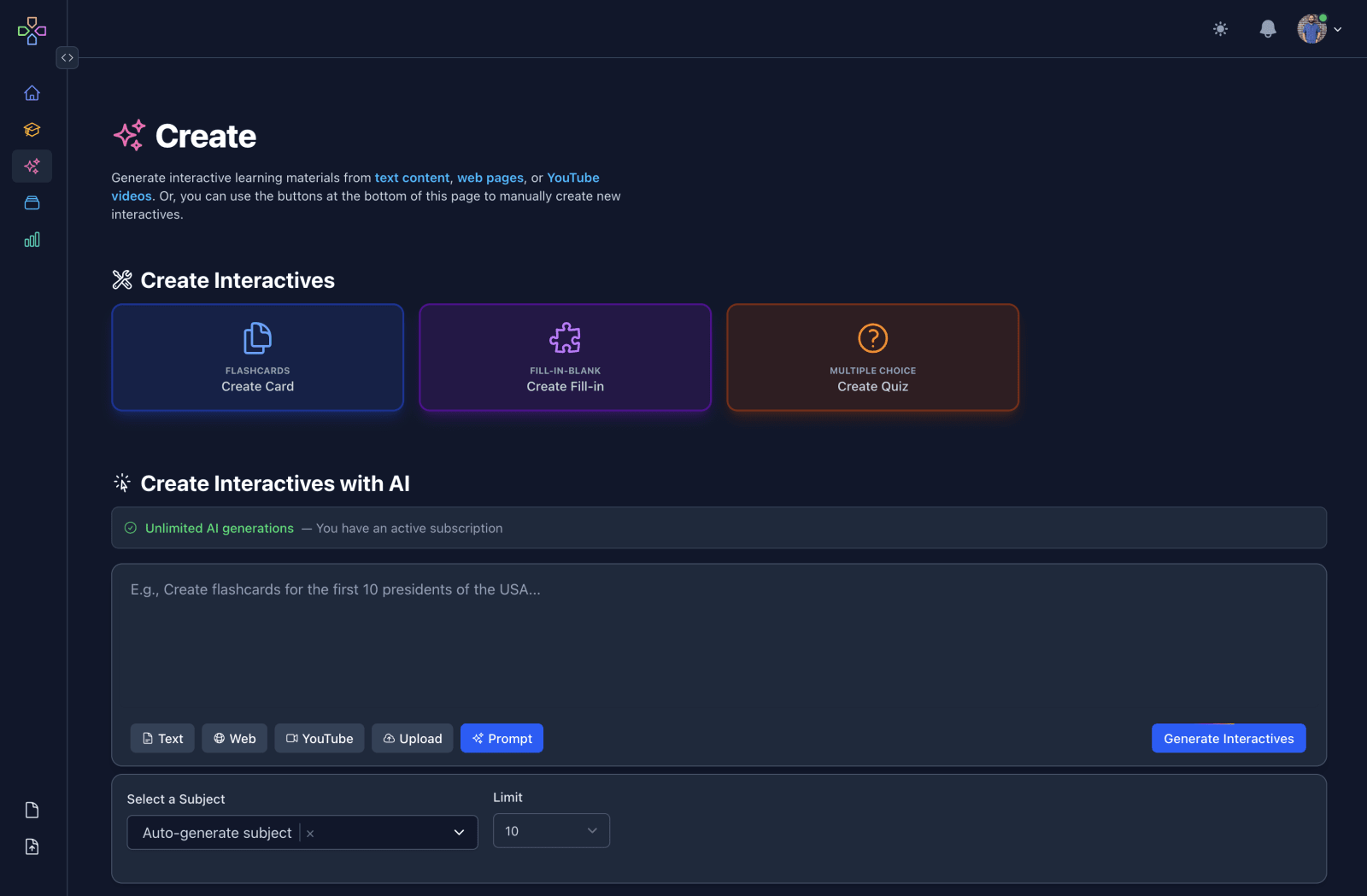
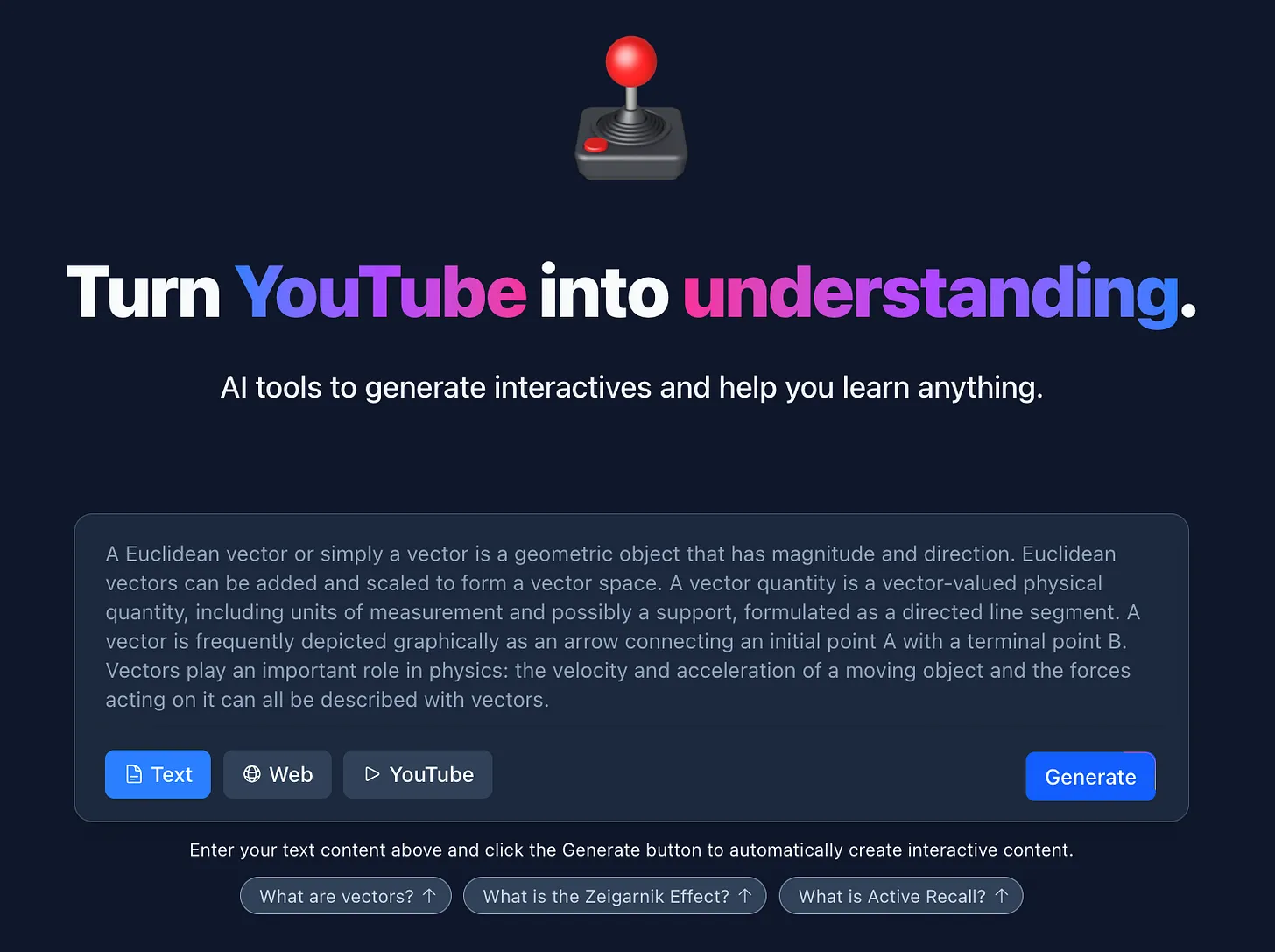
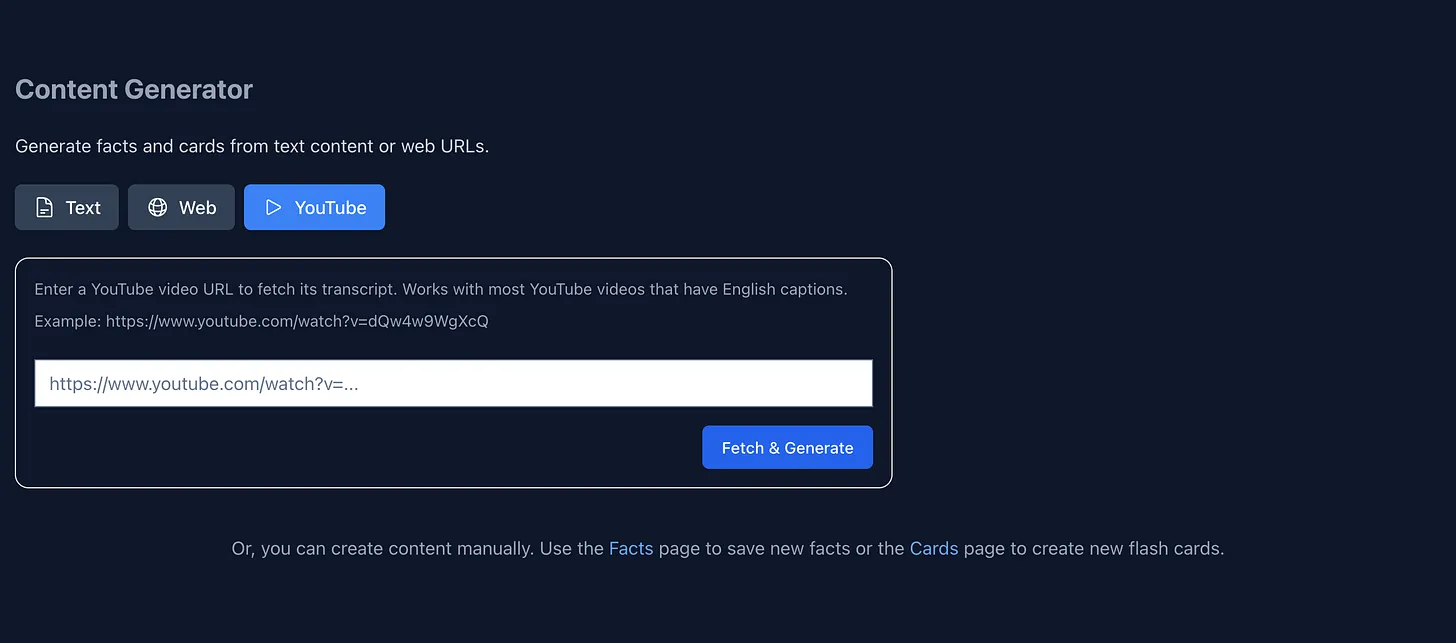
Completely redesigned the Create page in the web app.
Renamed Interactive Mode to Ask, and gave it a lot more to do. It started out as a way to ask questions about your learning data. Now it can create and update subjects, goals, resources, lessons, and notes, so you can change almost anything by typing a sentence instead of clicking through screens. It will also answer a general question about a topic and offer to build interactives from the answer. Ask now works on both the web and the iPhone and iPad apps.
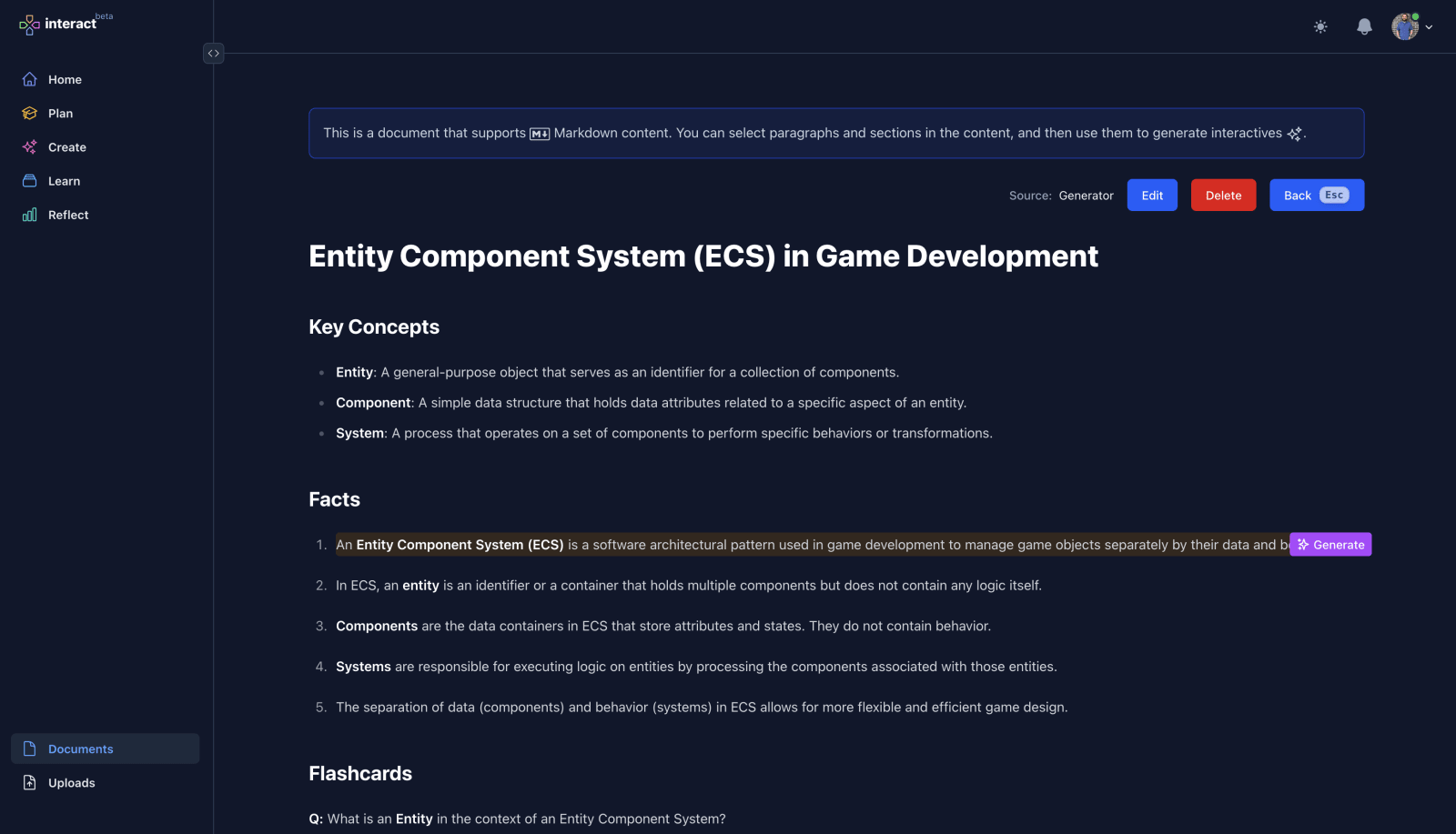
Integrated math syntax into the generator features. Generated lessons can now include LaTeX equations, which works well for math and physics subjects. Code snippets come through with syntax highlighting too.
Added invoices to the Billing page. Every past payment links to its Stripe invoice, so you can submit one if your job or school offers an educational stipend and get your subscription reimbursed.
Made the confetti on Apple TV clickable. After you finish a lesson, click to set off the celebration again.
Launched v0.3 of the native apps with major usability improvements and bug fixes for interactive lessons.
Launched v0.4 of the native apps with a new Ask mode and the ability to read cards aloud.
Decluttered the onboarding experience and removed the onboarding panel. Simplified the layout for new users to prevent overwhelm.
Started focusing on the core problems we're trying to solve: handling different types and sizes of content for the Generator features. Worked on adding different modes for when we want to handle content that we're already familiar with or actively working with or completely new to.
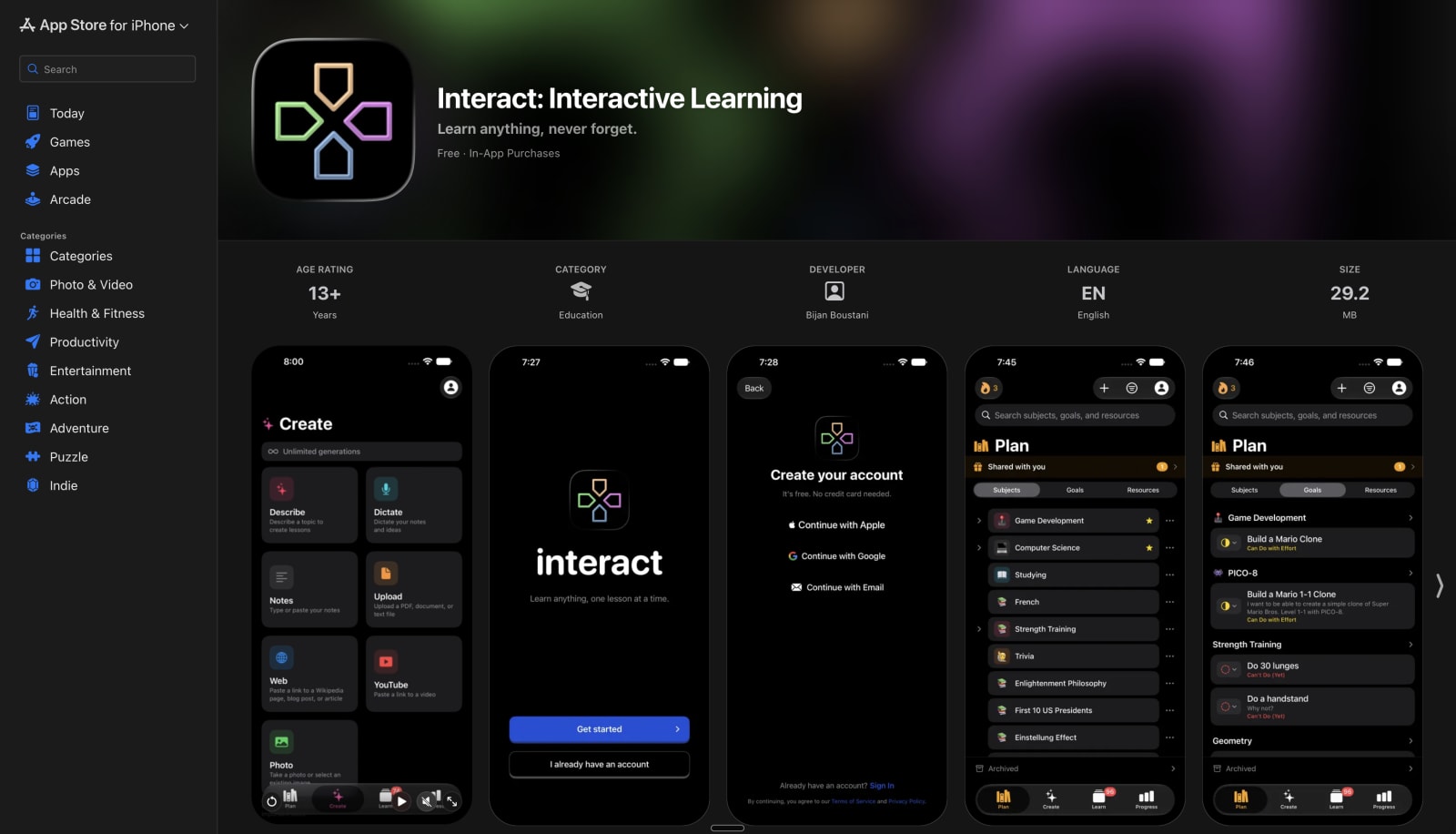
Interact is live on the App Store! After the soft launch, the native apps are approved and available to everyone. Download Interact on the App Store for iPhone, iPad, Apple TV, and Apple Watch.
Rebuilt the sharing features. Shared subjects now show a full preview of everything inside, visitors can play the interactives right on the page, and a share link flows straight through signup into your own cloned copy.
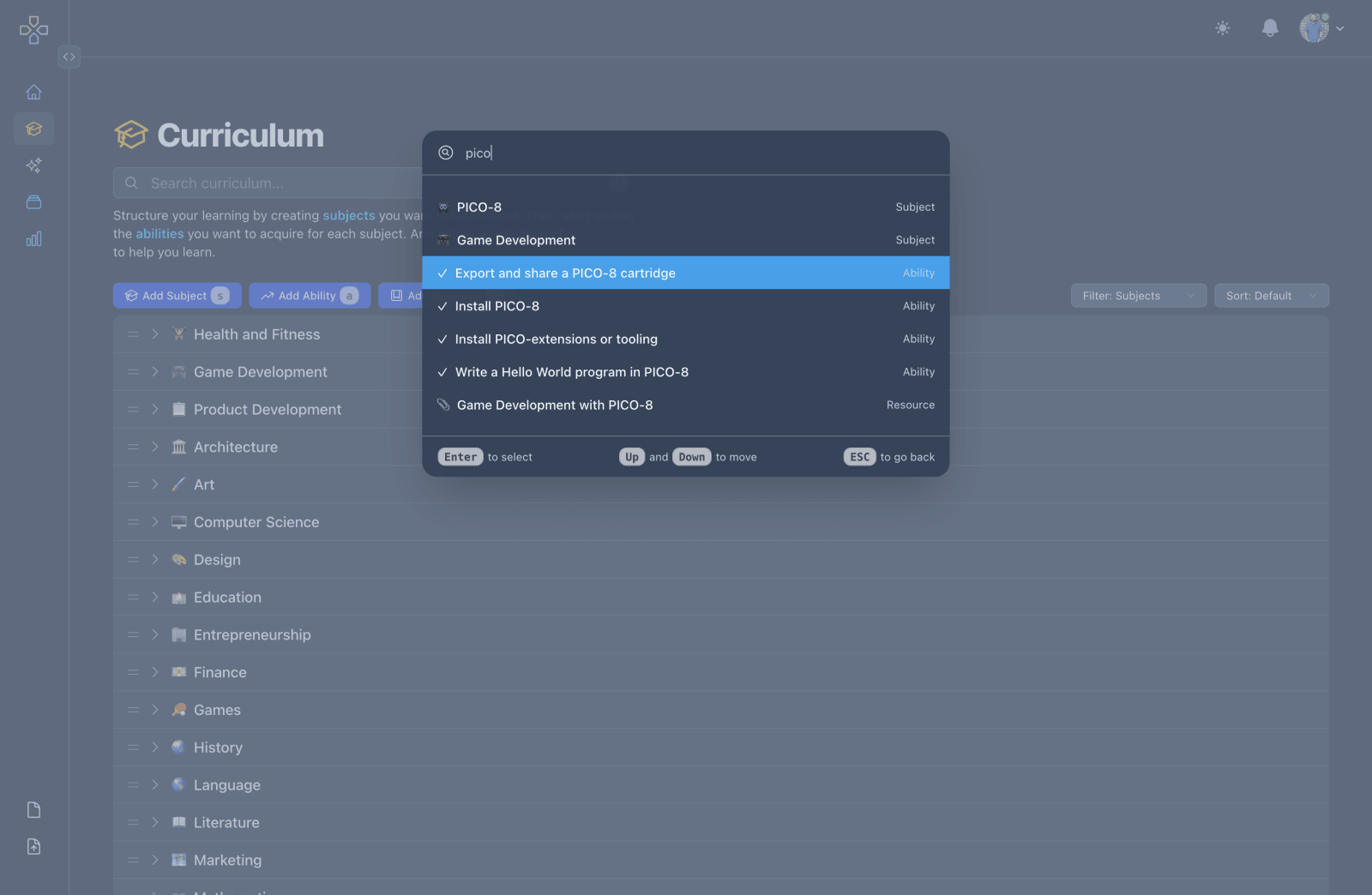
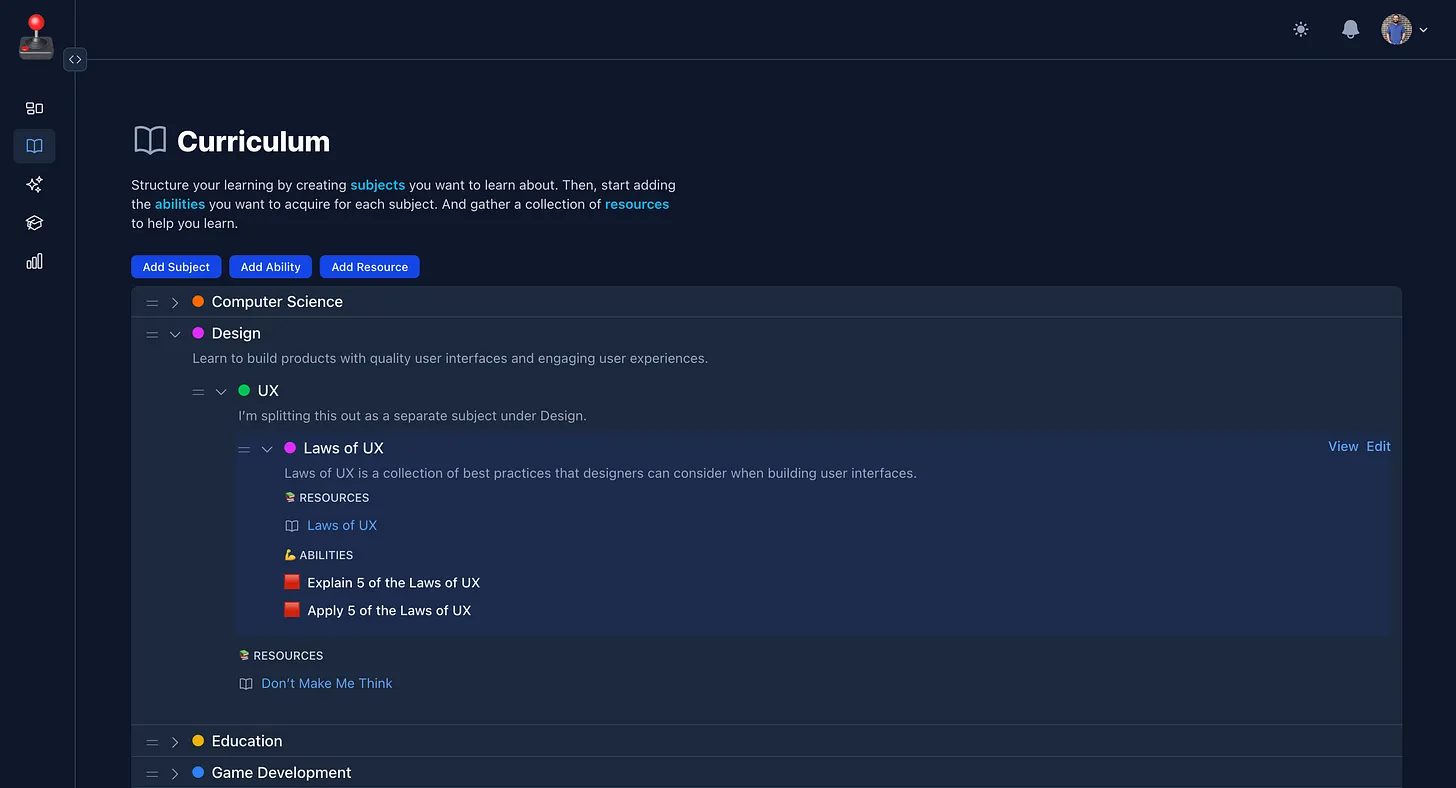
Built an AI curriculum builder so you can scaffold out a curriculum with a prompt like "I want to learn Electric Guitar in the style of Metallica and Kirk Hammett". Then we can fetch relevant content to create subjects, goals, and resources.
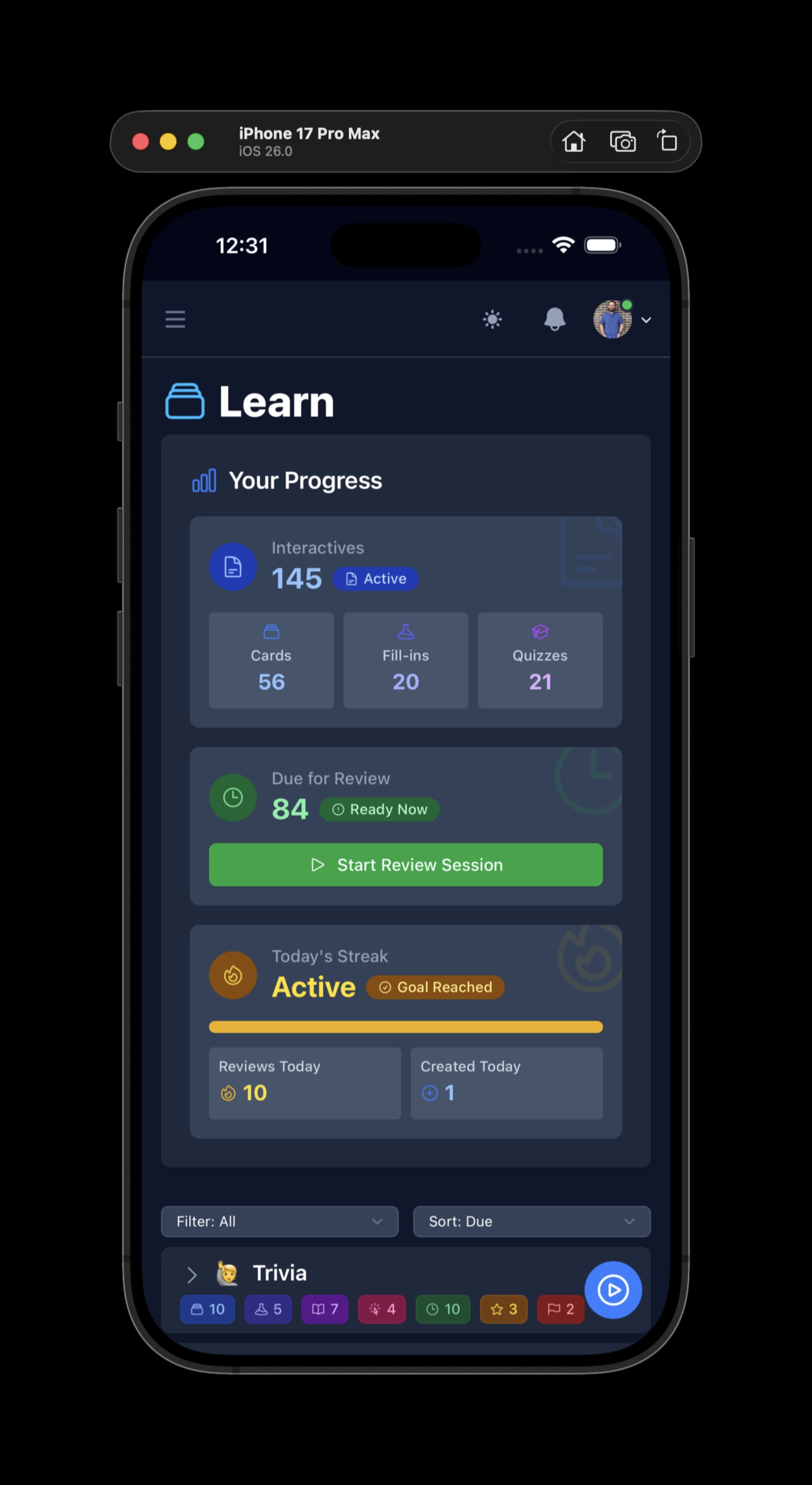
Swipe down on the Learn screen for a quick review. This works well when you don't have time to review dozens of interactives, but just want to do a couple at a time.
Added a new Dictate feature to the iOS app.
The Generator features now show what they're doing at each step. A step-by-step progress checklist plays out on web and iOS while your lesson is built.
Wrote a new Docs section, with guides covering everything from your first subject to the Apple TV app.
Added a new "Agent View" and llms.txt for a machine-readable version of what we do here.
Massively upgraded the confetti particle system on iOS.
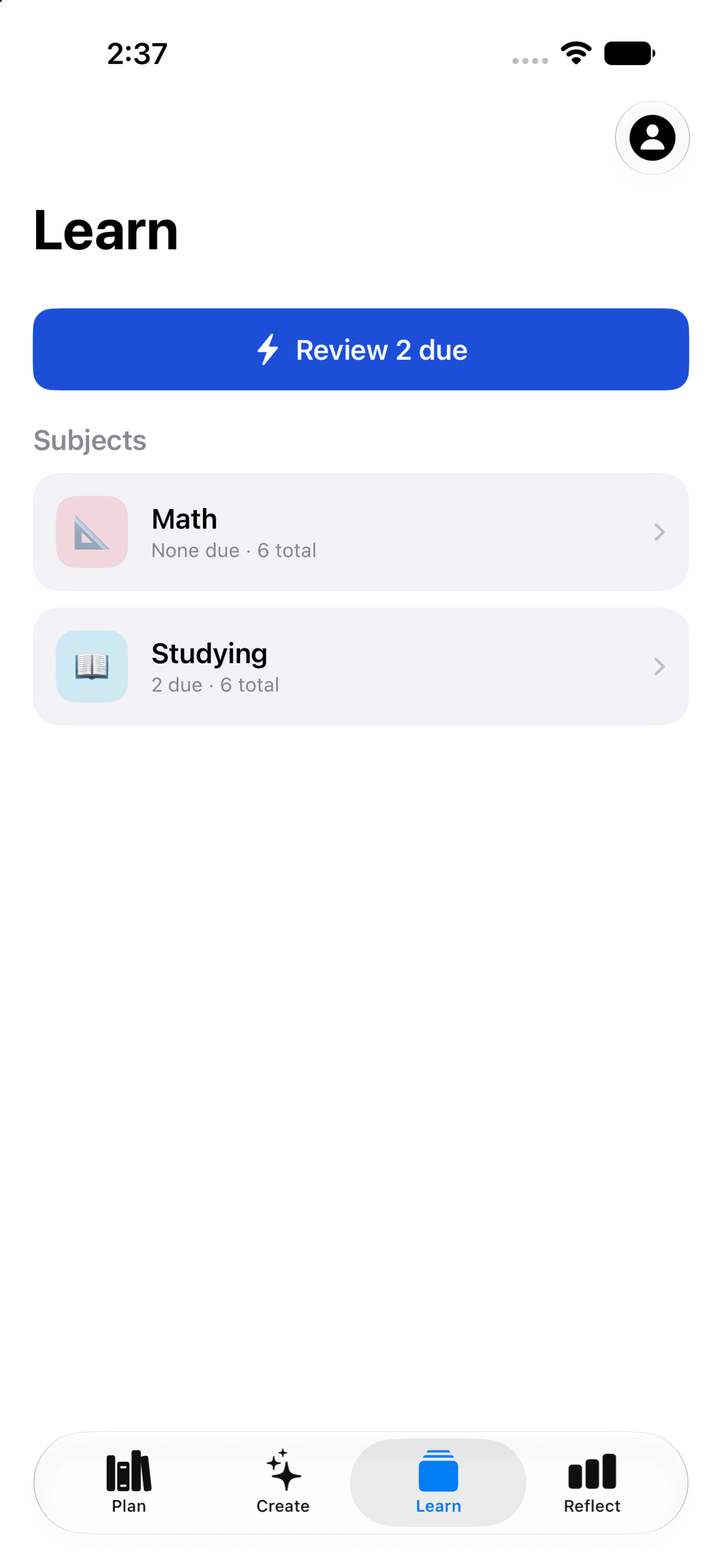
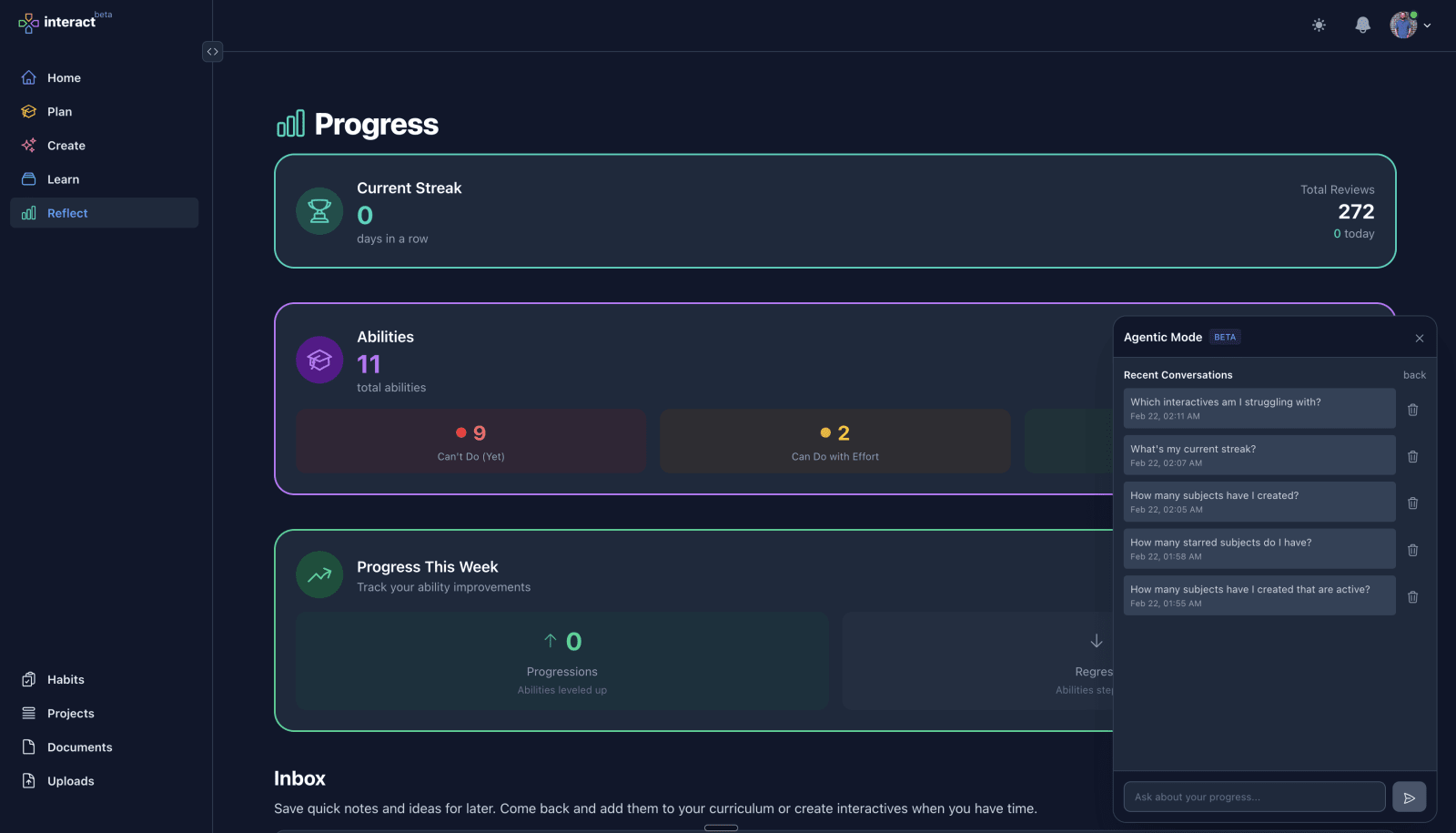
/app/create, /app/plan, and /app/reflect.

As I walked around that charming town I undertook the task of solving the puzzle. Within the hour, the camera, the film, and the physical chemistry became so clear to me. [...] By the end of that walk, the solution to the problem had been pretty well formulated. I would say that everything had been, except those few details that took from 1943 to 1973.