You learn to program by writing programs. Cards help with the part that slows you down: syntax, standard library names, and what a line of code does before you run it.
Four ways to study code
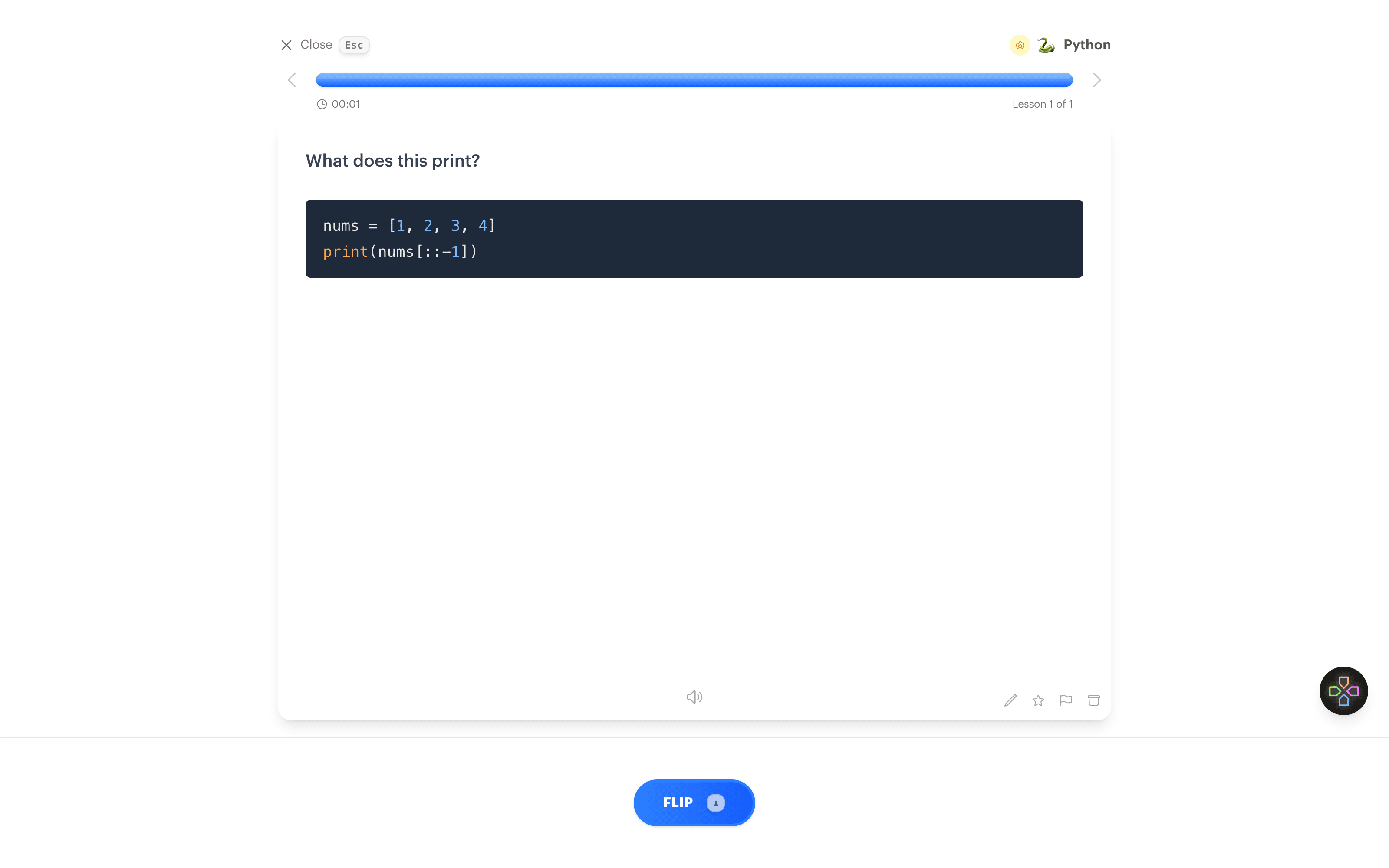
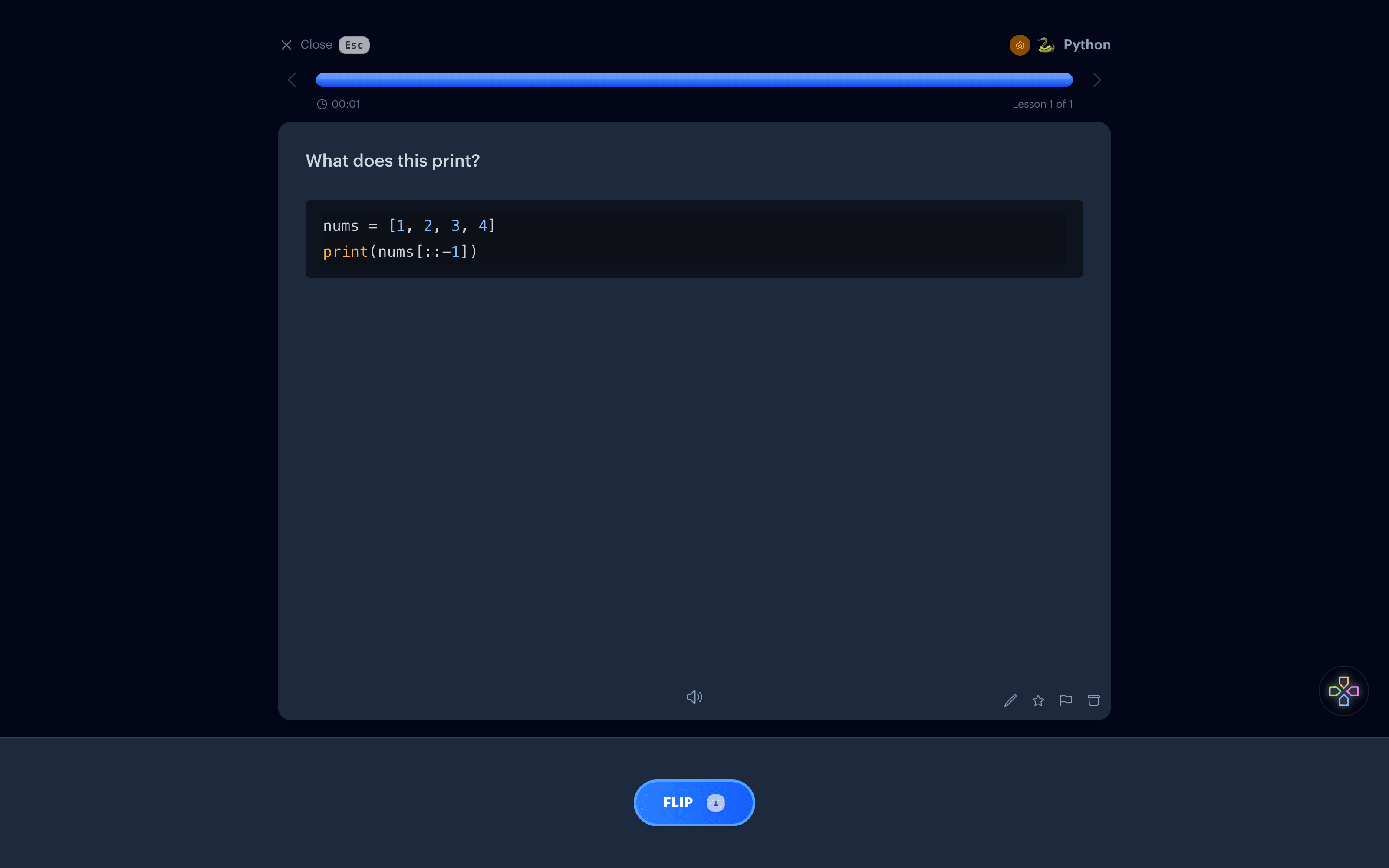
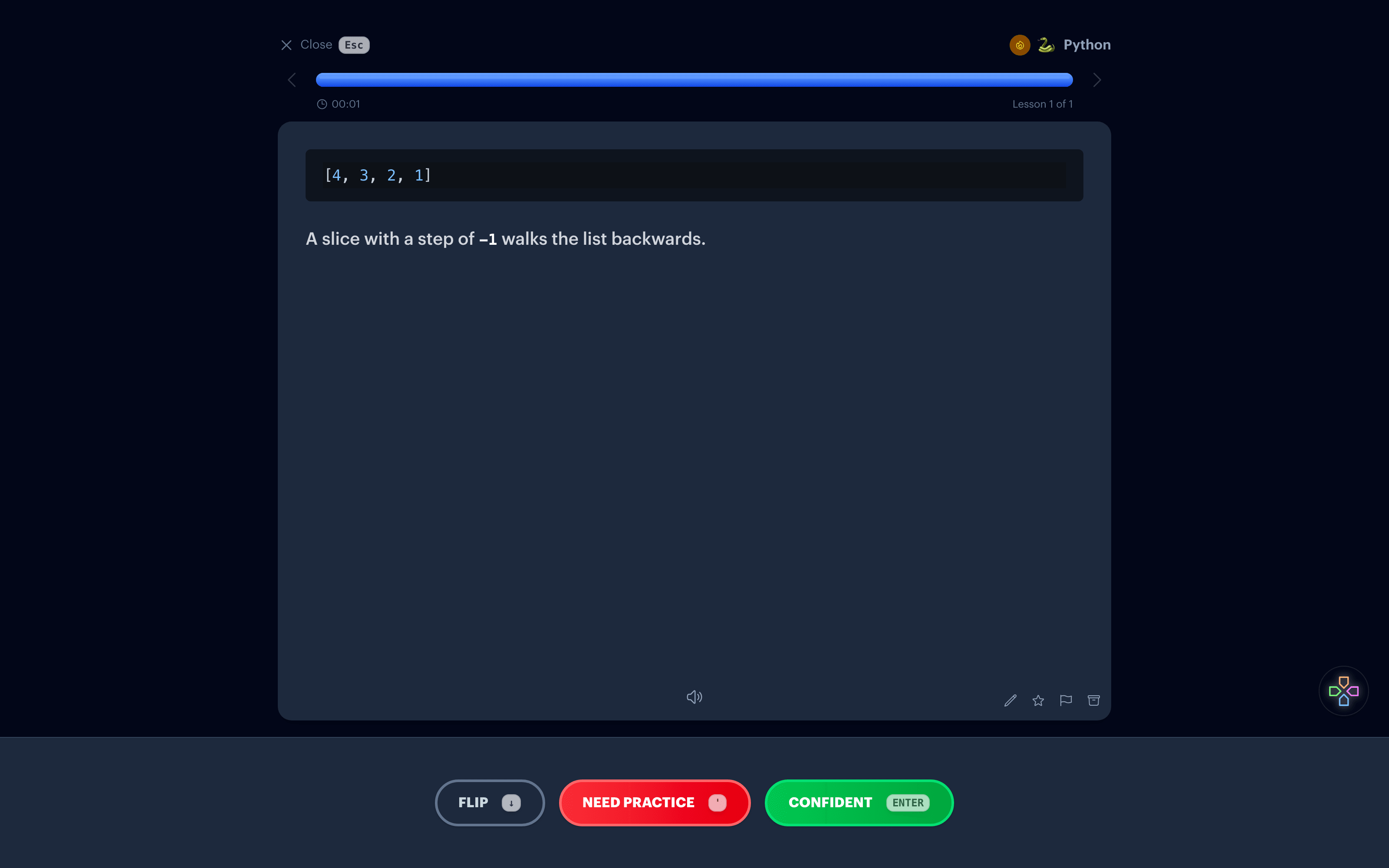
Predict the output
Put a short snippet on the front and what it prints on the back. Code blocks are syntax highlighted, so the card reads like your editor.
Flashcards in lessonsType the names you keep looking up
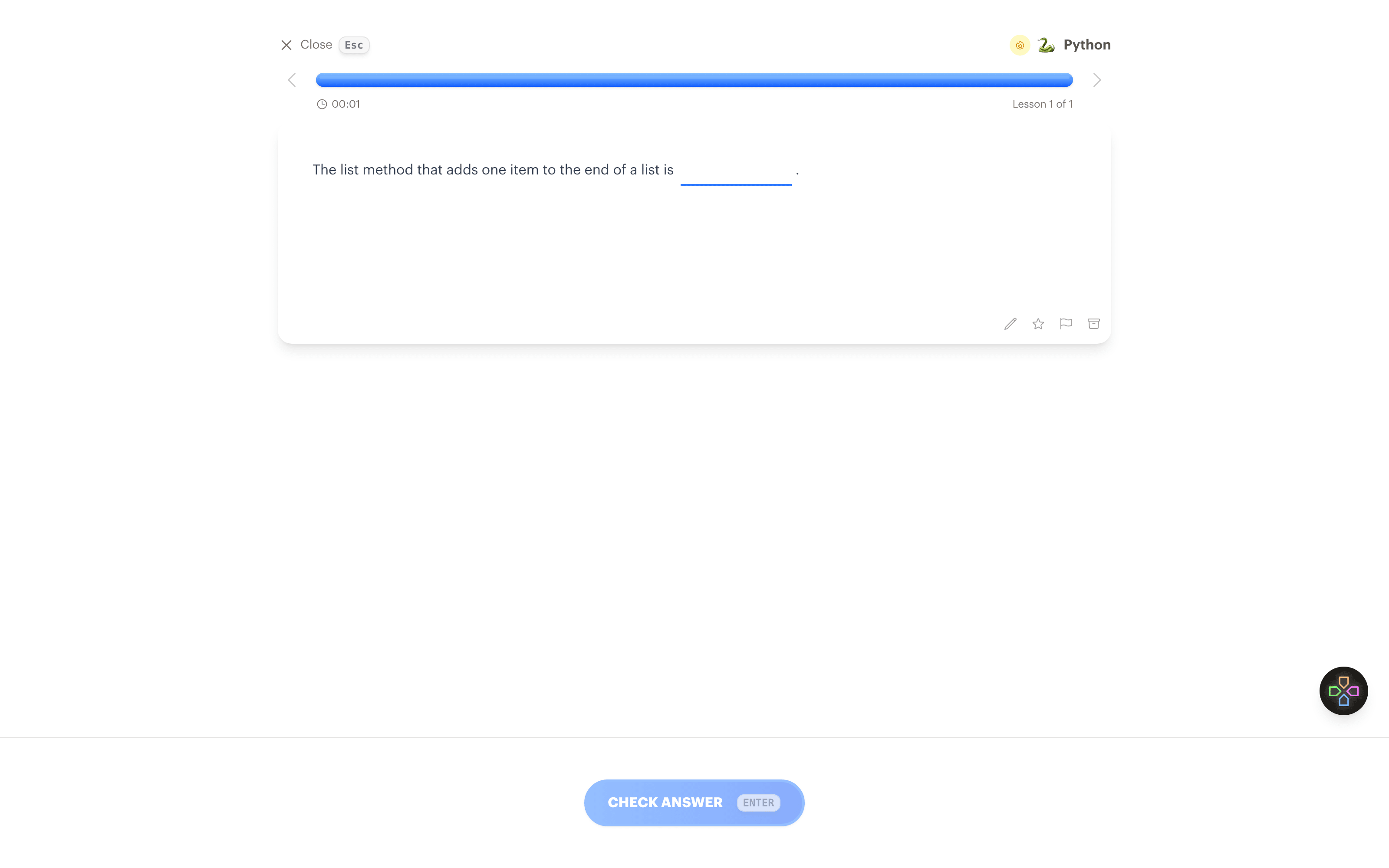
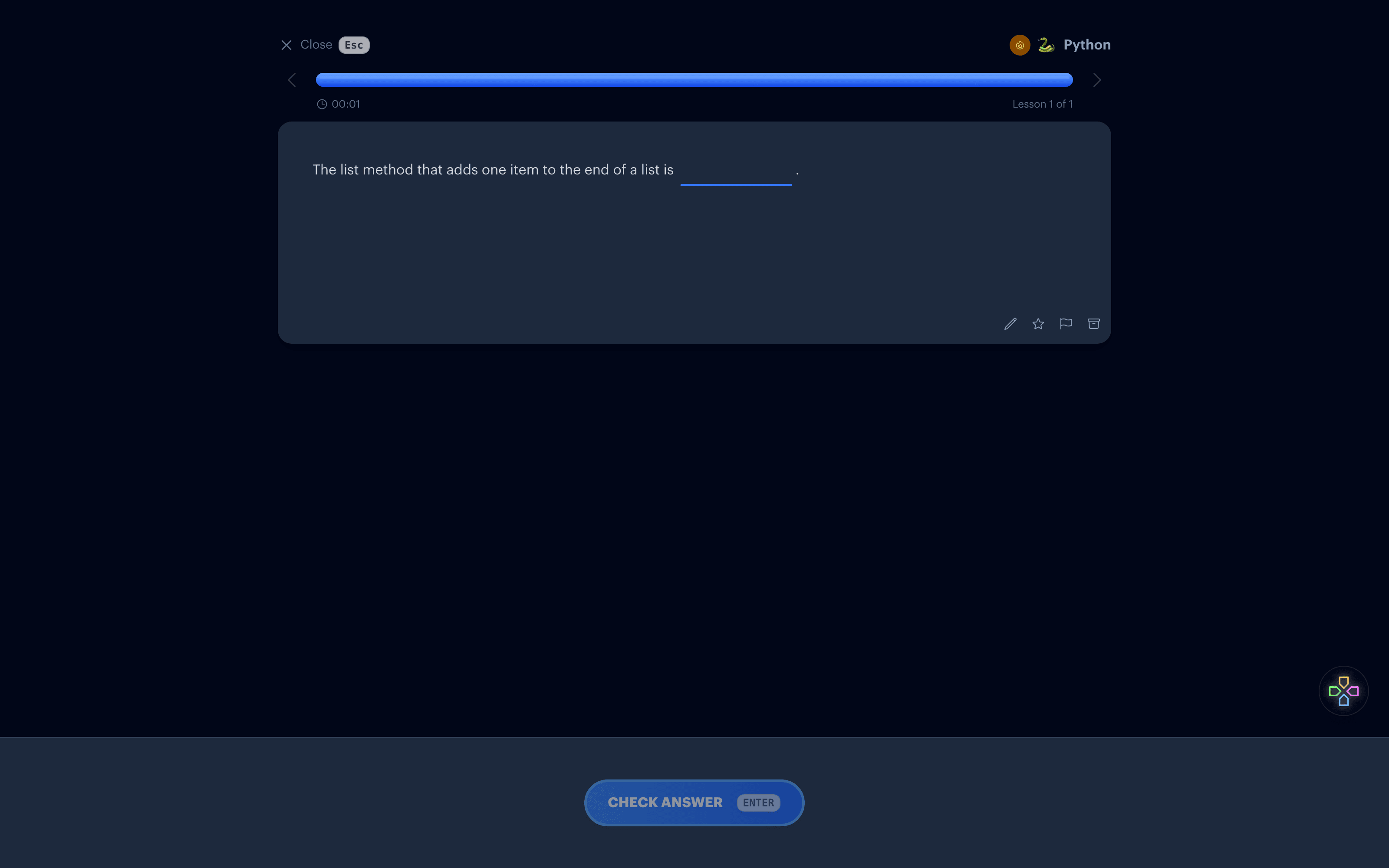
A typed answer exercise suits a method name, a keyword, or a command line flag. Keep the answer short. It's matched against the text you type.
Type the answerTurn the docs into cards
Paste a link to a documentation page or a tutorial and Interact drafts cards from it. Edit or delete anything that isn't worth remembering.
Website to flashcardsDo the same with a video
Conference talks and course videos work too. Paste the link and review the main points afterwards instead of rewatching.
YouTube to flashcards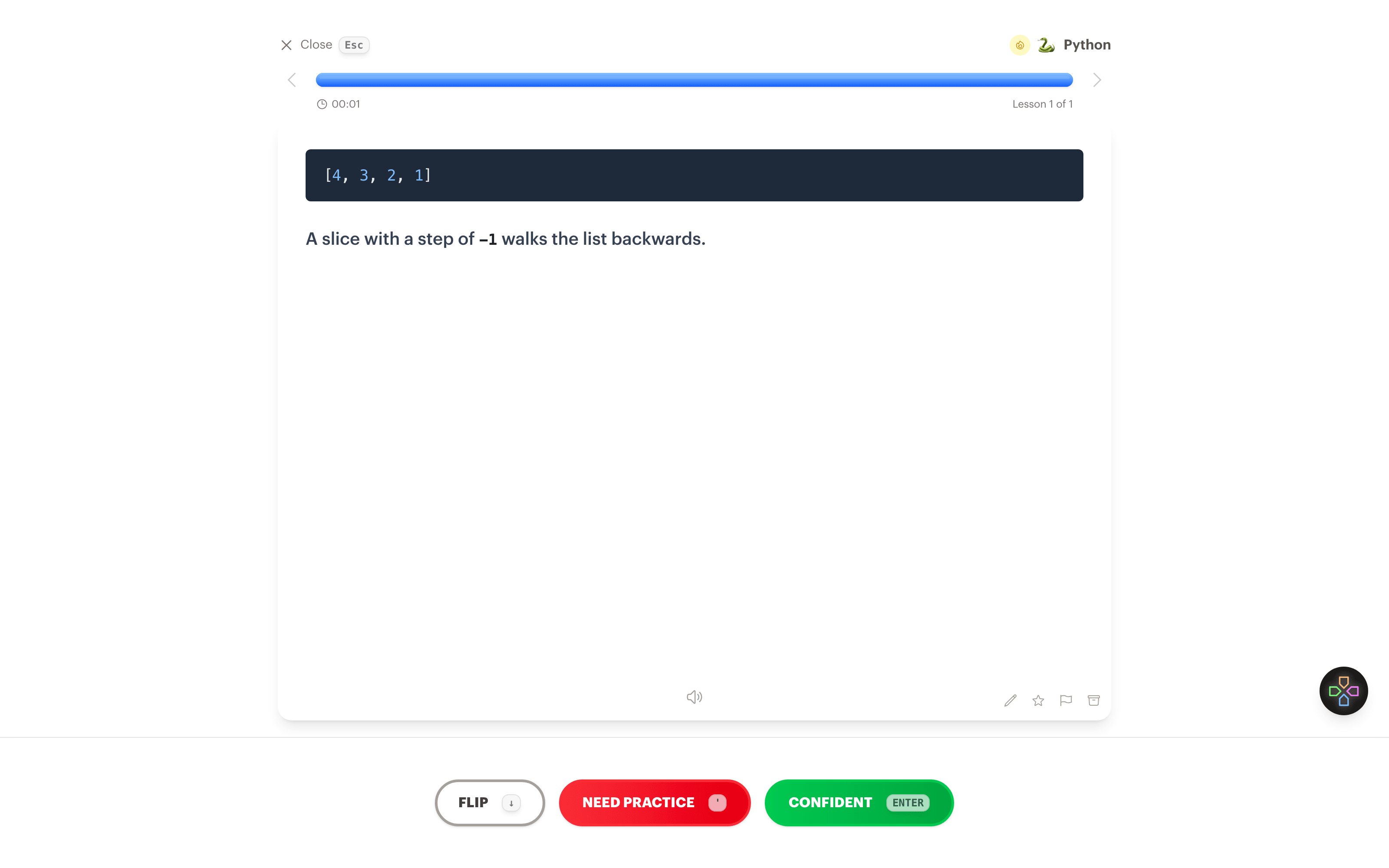
What to put on a card
Good candidates are things you've looked up more than twice: slice syntax, the argument order of a function, the difference between two similar methods, a keyboard shortcut.
Leave out anything you'd only use once. A small set you review is worth more than a large one you don't.
Start with a prompt
The Describe option on the Create page turns a sentence into a set of interactives. This one is a reasonable first set. Change it to match what you're studying.
5 flashcards on Python list and dictionary methods. Put a short code snippet on the front and what it returns on the back.
Common questions
Which languages are highlighted?
Common languages are highlighted, including Python, JavaScript, and SQL. Name the language on the code block.
Does it run my code?
No. Cards show code and typed answers are compared as text. Write and run programs in your own editor.
Does it work for interview prep?
Yes, for the parts you can memorize: complexity of common operations, data structure trade-offs, and patterns you want to recognize quickly.
Is it free?
Making cards by hand is unlimited on every plan. The free plan includes 10 AI generations a month.
Stop looking up the same thing
Get Started Free
No credit card required
More things to learn
Art History
Put the painting on the card and recall the title, artist, and period.
Languages
Learn vocabulary from pictures instead of translations, in both directions.
Math
Formulas that render like a textbook, with the worked steps on the back.
Anatomy
Mask the labels on a diagram and name each structure from memory.
Trivia
Describe a round in one sentence and play it as a quiz.


Made with
in Orlando, Florida.
© 2026 Create With LLC. All rights reserved.