Multiple choice lets you recognize the answer. Typing makes you produce it. Interact's typed answer exercises put a blank in front of you and nothing else, which is the most honest test of whether you actually know something.
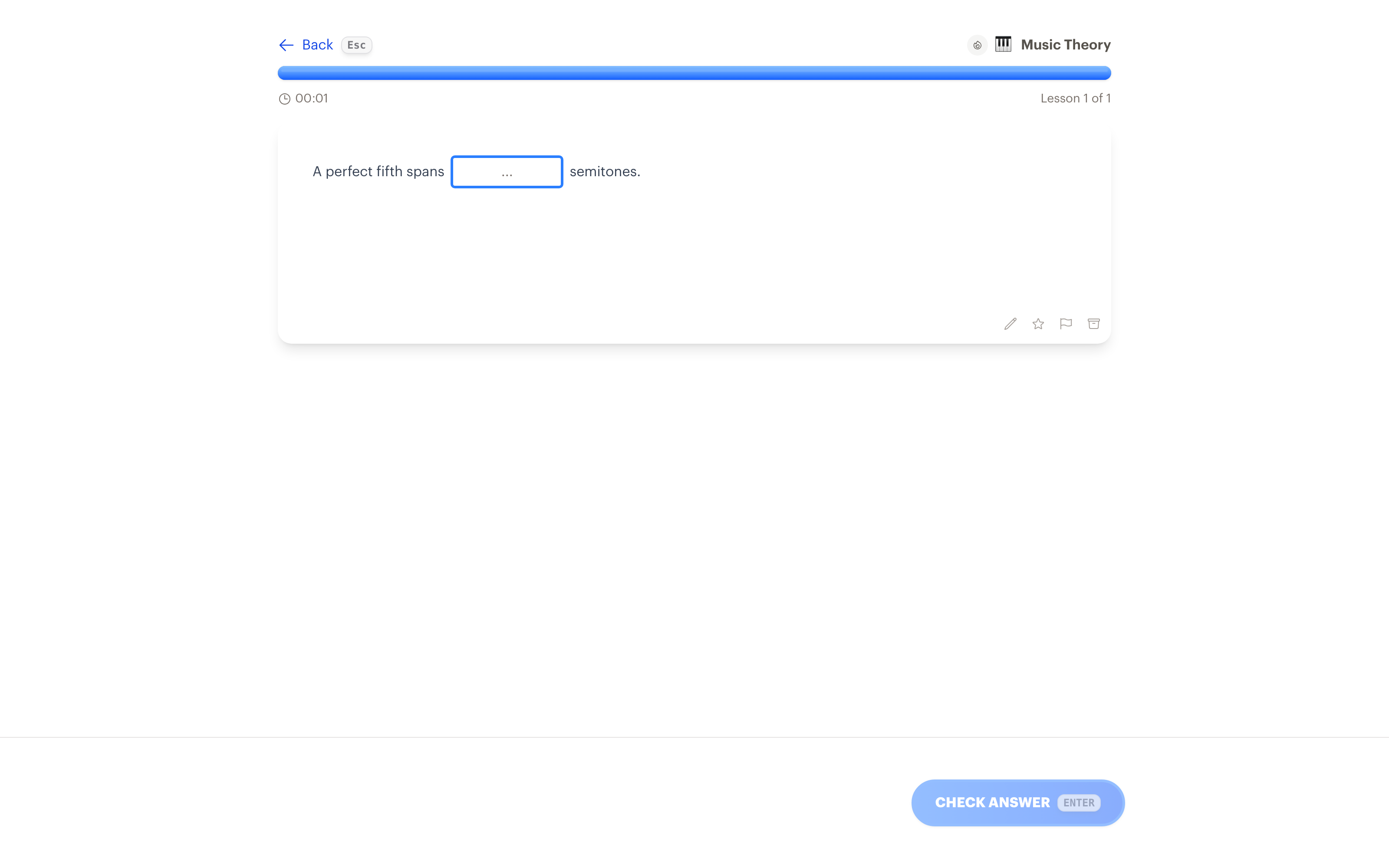
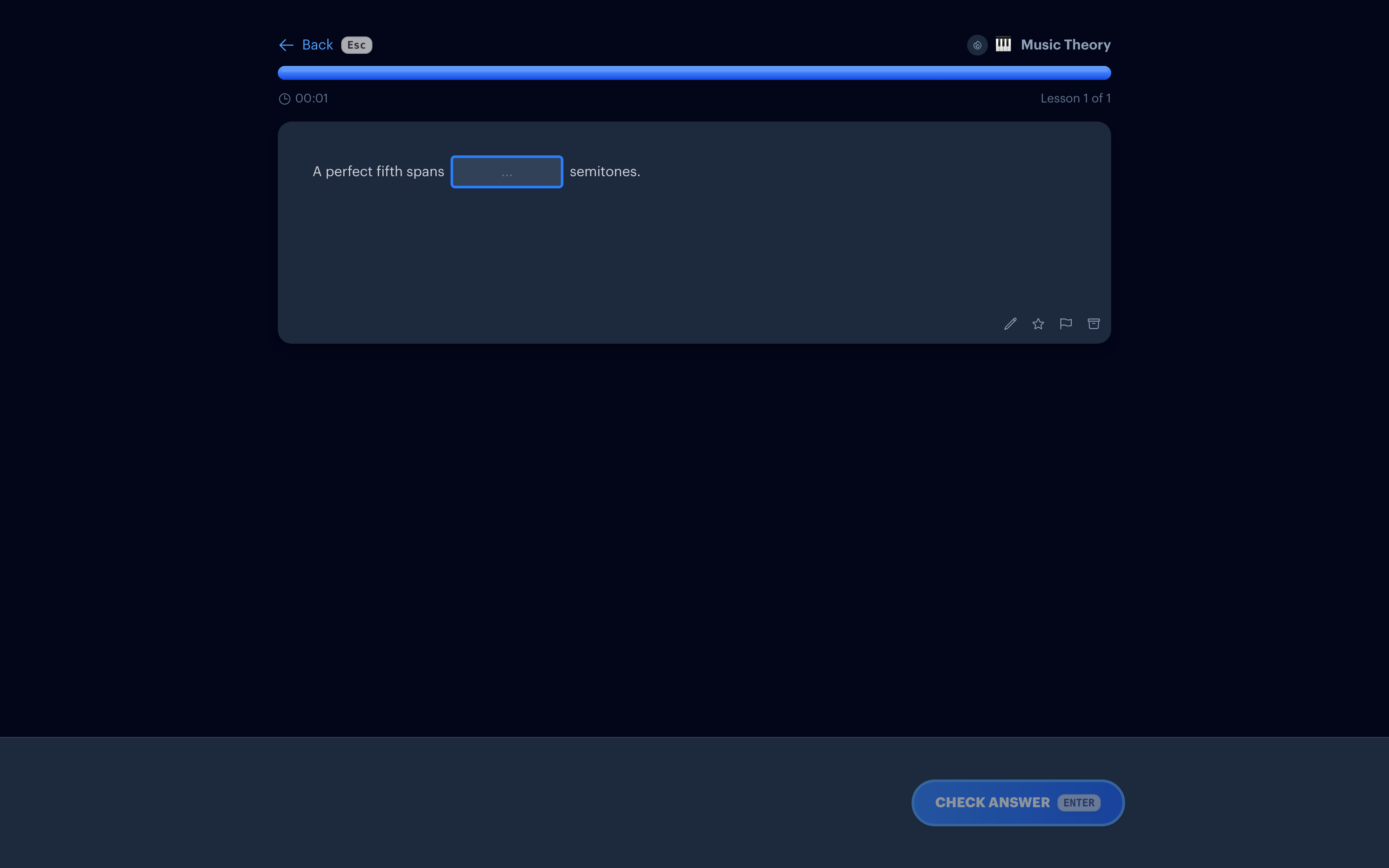
How it works
1. A sentence with a blank
Each exercise is a real sentence with the key term missing. Context stays, the answer doesn't.
2. You type what you know
No word bank, no choices to eliminate. Recognition is easy; recall is what exams and real life demand.
3. Grading forgives typos
Fuzzy matching accepts small misspellings, so "mitochondira" still counts. You're being tested on knowledge, not keyboard accuracy.
4. Missed ones come back sooner
Every typed answer rides the same spaced repetition schedule as your flashcards. Miss it and it returns soon; nail it and it moves further out.
When typing beats flipping
Exact facts are where typed answers earn their keep: vocabulary, dates, formulas, function names, terminology. If "close enough" isn't good enough, make it a typed answer.
For concepts and explanations, regular flashcards are the better tool, and quizzes are best for tricky distinctions. Interact mixes all of them in one queue, so each idea gets the format that fits it.
Common questions
Where can I play typed answers?
On the web, iPhone, iPad, and Apple TV. On Apple TV the system keyboard supports dictation, so you can even speak your answer at the couch.
Can AI generate typed answer exercises?
Yes. The generator produces them alongside flashcards and quizzes when you feed it a video, PDF, article, or your notes.
Is it free?
Creating typed answers by hand is unlimited on every plan. AI generation includes 10 free runs a month.
Isn't typing slower than flipping a card?
A little, and that's the point. The extra effort of producing the answer is exactly what makes it stick harder than recognition ever will.
Prove it to yourself, one blank at a time
Get Started Free
No credit card required
Used for
See how this fits into studying a whole subject.
More ways to learn with Interact
YouTube to Flashcards
Paste a video link and get flashcards, quizzes, and fill-in-the-blanks built from it.
YouTube to Quiz
Generate a multiple choice quiz from any YouTube video and edit every question.
PDF to Flashcards
Upload lecture slides, textbook chapters, or photos of notes and study them as flashcards.
Website to Flashcards
Turn any article or webpage into study material by pasting the link.
Notes to Flashcards
Paste typed notes or snap a photo of handwritten pages and make them reviewable.
Visual Flashcards
Put an AI-drawn picture on the back of a vocabulary card instead of a translation.
Fetch Image
Name a painting, a landmark, or a species and the picture lands on your card.
Image Occlusion
Mask the labels on a diagram or map and quiz yourself on what is underneath.
Interactive Lessons
Five lesson types with animations, sound effects, and keyboard shortcuts that keep review fun.
Flashcards on Apple TV
A native tvOS app for reviewing your queue on the big screen.
Flashcards on Apple Watch
Dictate card ideas from your wrist and they land in your study queue.
Personal Curriculum
Organize subjects, goals, and resources for everything you are learning.
Progress & Streaks
Track a daily streak, watch goals move, and catch follow-ups without breaking focus.
Ask
Ask a question, then say what to build or change. No clicking through screens.


Made with
in Orlando, Florida.
© 2026 Create With LLC. All rights reserved.